Solving the Operational Pressures Facing Modern Bus Fleets

Running a bus fleet involves far more than keeping vehicles on the road. Operators must manage energy costs, maintenance schedules, passenger demand, route coverage and increasingly varied environmental requirements, often within tight budgets. These pressures are interconnected: an unexpected vehicle failure can disrupt service frequency, while inefficient energy use can increase the cost of every … Read more

How a DNA and RNA Extraction Kit Supports Viral DNA Extraction During Emerging Disease Surveillance

Rapid pathogen spread demands immediate molecular detection capabilities across regional healthcare centers during unexpected viral crises. Public health laboratories rely heavily on standardized reagents to manage unknown outbreaks swiftly and accurately under pressure. Effective epidemiological monitoring hinges on high-purity template isolation from complex patient specimens received daily. Selecting robust purification consumables directly determines whether diagnostic … Read more

How Surface Active Metals Influence the Cure Rate of Threadlocker Adhesives

Threadlocker adhesives are widely used to secure threaded fasteners in mechanical assemblies, but their curing behavior is not identical across all metal surfaces. A threadlocker applied to one type of fastener may reach handling strength quickly, while the same adhesive may require significantly more time to cure on another metal. The difference is closely related … Read more

How to Choose the Right Church Chair Manufacturer for Your Congregation?

Selecting chairs for a church requires careful planning beyond appearance and purchase price. Seating must accommodate the congregation, fit the available floor area, and support regular services. Some churches also use their halls for meetings, education, and community activities. These different needs affect chair design, layout, maintenance, and long-term costs.

For church administrators, project contractors, government procurement teams, and furniture distributors, choosing a manufacturer involves several practical checks. Product specifications, production capabilities, quality control, delivery schedules, and after-sales support all deserve attention. Comparing these factors helps buyers identify a supplier whose products and services match the project’s actual requirements.
What Does Your Congregation Need?

Begin with the number of expected attendees and the activities held in the building. Churches with several services each day may require durable upholstery and straightforward cleaning procedures. Multipurpose halls may need flexible layouts that can be changed for meetings, performances, or community events.

Floor planning is equally important. Buyers should measure the usable area and account for aisles, entrances, accessible routes, and space around the altar or stage. Chair dimensions alone cannot determine the final capacity. Row spacing and movement routes also affect how many people can be seated comfortably.

When evaluating worship seating, decide whether fixed rows or movable chairs suit the facility better. Fixed arrangements maintain consistent positions, while movable options offer greater flexibility. The decision should reflect staff availability, storage space, event frequency, and the time required to prepare the hall.

Which Dimensions and Features Matter?

Chair width, seat depth, back height, and row spacing influence both capacity and comfort. Buyers should compare these measurements with the floor plan instead of selecting chairs based on photographs. Mock layouts or sample installations can reveal clearance problems before a large order is placed.

Comfort also depends on cushion shape and back support. Ergonomic cushioning with lumbar support may provide a more supportive sitting position during lengthy services. Upholstery should be assessed for appearance, cleaning requirements, and suitability for the intended environment. Material samples can help procurement teams compare finishes before confirming an order.

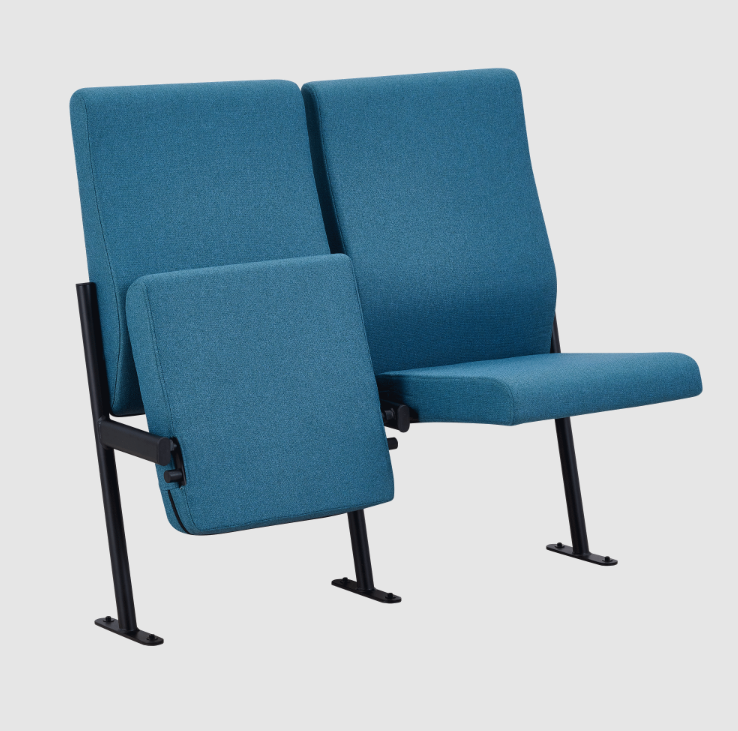
The Norr L-A13 provides one example of a space-conscious chair design. It features a European minimalist style, a fully upholstered outer back, and a fully upholstered seat pan. Its ergonomically shaped cushion includes lumbar support. The stated minimum row spacing is 31.5 inches, which gives planners a reference when assessing room capacity.

How Can Construction Affect Service Life?

Appearance does not reveal every detail of a chair’s construction. Buyers should examine the supporting frame, seat mechanism, upholstery attachment, and connection points. These components influence daily use and the maintenance work required over time.

The Norr L-A13 uses strong steel structural support and a counterweight tip-up seat mechanism. Its configuration can include a hardwood armrest or no armrest. Buyers should confirm the selected options and request relevant technical documents before approving the final specification. Test information should relate to the actual model rather than an unrelated product in the same range.

Maintenance planning should also form part of the purchase review. Ask which cleaning methods are suitable for the upholstery and whether replacement parts can be ordered later. Documenting these details helps facility managers plan routine inspections and respond to wear without disrupting scheduled activities.

Does the Manufacturer Control Its Production Process?

Production capability matters when a project requires hundreds or thousands of chairs. Buyers should ask how the supplier manages material sourcing, component manufacturing, assembly, finishing, and final inspection. They should also confirm production capacity and the proposed schedule for the required quantity.

Integrated manufacturing can simplify coordination when several processes contribute to one finished product. Mold development, metal processing, coating, injection molding, foam production, aluminum die casting, and wood processing may each affect component consistency. Procurement teams should establish which processes are handled internally and which depend on external suppliers.

For institutional furniture projects, worship seating manufacturers should also be able to clarify technical specifications and installation requirements. Useful documents include product drawings, approved configurations, material details, and packing information. Clear records help contractors coordinate the furniture order with building schedules and site conditions.

How Should Buyers Assess Quality and After-Sales Support?

Quality checks should cover materials, assembly, finish, and the completed chair. Buyers can request information about incoming inspections, production checks, and final acceptance procedures. Relevant certifications and test reports should be checked against the proposed model and the project’s requirements.

Warranty terms need the same level of scrutiny. Procurement teams should clarify the coverage period, exclusions, repair responsibilities, and process for reporting defects. Overseas distributors may also need information about spare parts, technical communication, and service arrangements across different regions. Written terms provide a clearer basis for comparing suppliers.

Leadcom seating lists a five-year manufacturer’s limited warranty against manufacturing defects under normal usage, together with lifetime maintenance. Its current website also reports more than 128 patents and provides information about its integrated manufacturing capabilities. Buyers should confirm the applicable warranty coverage and service arrangements for their projects. These capabilities can be considered alongside project references, technical documentation, and the supplier’s ability to meet agreed requirements.

Can the Supplier Meet Your Delivery and Installation Needs?

Delivery planning should begin with a confirmed quantity, production schedule, packaging method, and site access assessment. Projects involving several halls may require phased deliveries. Buyers should agree on unloading arrangements, temporary storage, installation responsibilities, and acceptance checks before production begins.

Installation documents can help contractors arrange rows consistently and verify spacing. Where appropriate, an approved layout drawing or sample installation can identify conflicts before the full order arrives. The procurement team should also confirm whether the quotation includes installation services or covers furniture supply only.

Future expansion deserves consideration as well. Churches may need additional chairs when attendance increases or room layouts change. Ask whether the same model, finish, and configuration may be available for later orders, subject to production availability. Keeping approved specifications and drawings on file can simplify repeat purchasing.

Make the Choice Against Clear Project Criteria

The right manufacturer should match the congregation’s needs, room dimensions, product requirements, budget, and service expectations. Compare quotations using the same criteria, including comfort, construction, maintenance, delivery, warranty, and installation support. Initial price is only one part of the purchasing decision.

For church administrators and institutional buyers, worship seating should be evaluated through practical specifications rather than appearance alone. Leadcom seating offers institutional furniture options, including the Norr L-A13, for churches, auditoriums, and multipurpose rooms. Reviewing the proposed configuration, technical documents, and written service terms helps buyers determine whether the supplier is suitable for their project.
Comparing Hydraulic Servo and Fan VFD Energy Use Through Data Logging

Electricity bills show how much energy a factory consumes, but they rarely explain which equipment causes changes in demand. Hydraulic machinery and industrial ventilation systems have different operating patterns. Their energy consumption must therefore be recorded and evaluated using suitable measurement methods. Comparing Hydraulic Servo systems with a fan vfd requires more than collecting electricity … Read more

Understanding What a Multi-Asset CFD Account Really Offers

For traders who follow more than one financial market, managing different instruments through separate accounts can create unnecessary complexity. A multi-asset CFD account can bring several markets together under one trading environment, making it easier to monitor positions, manage margin, and review trading activity. However, having access to multiple markets does not automatically make trading simpler or reduce the risks involved.

Understanding what an account can actually simplify is an important step before deciding how to trade CFDs. The right approach starts with knowing how CFDs work, what a CFD broker provides, and which responsibilities remain with the trader.

CFD Account

What Is a Multi-Asset CFD Account?

A Contract for Difference, commonly known as a CFD, allows traders to speculate on the price movement of an underlying financial instrument without owning that asset directly. Depending on the broker and jurisdiction, CFDs may provide access to markets such as forex, indices, commodities, metals, shares, cryptocurrencies, and futures.

A multi-asset account brings several of these markets into one account structure. GTCFX, for example, provides access to a range of CFD markets, including forex, metals, energy, indices, shares, cryptocurrencies, and futures, subject to account type and regional availability.

This structure can be useful for traders who monitor several markets but want to avoid maintaining separate account balances and trading environments for each asset class.

What Can a Multi-Asset Account Simplify?

One of the clearest benefits is account management. Instead of moving between multiple brokerage accounts, a trader can monitor different CFD positions from a single environment. This can make it easier to review open trades, available margin, and account equity.

It can also simplify market monitoring. A trader might follow EUR/USD, gold, and a major equity index because each market responds to different economic factors. Having them available through one trading account allows the trader to compare price movements and market conditions without switching between unrelated platforms.

Another practical benefit is centralized funding and reporting. When several markets are traded through the same account, deposits, withdrawals, transaction records, and performance information can generally be reviewed within the same account structure. The exact funding methods, reporting features, and available instruments depend on the CFD broker and the applicable account terms.

Technology can also become more convenient. GTCFX offers access to platforms including MT4, MT5, and its GTC Go application, giving traders different ways to monitor and manage positions.

However, convenience should not be confused with simplicity in decision-making.

What It Does Not Simplify

A multi-asset account does not eliminate the need to understand each market. Forex, commodities, indices, and shares can respond to very different factors. Currency markets may react strongly to interest rate decisions and economic data, while commodities can be influenced by supply conditions and geopolitical developments.

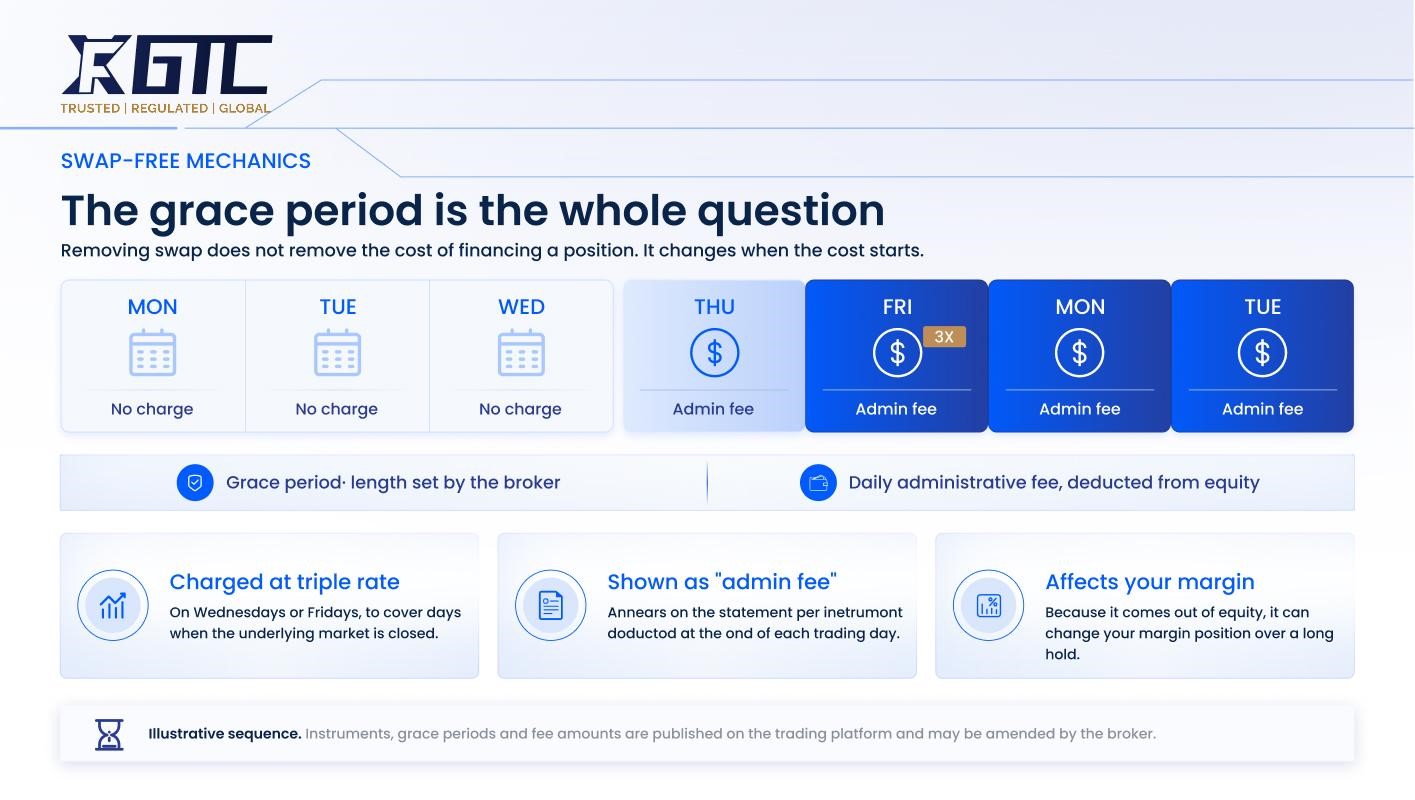
The trading process may look similar across markets, but the underlying risks can differ significantly. Traders still need to understand contract specifications, trading hours, spreads, financing charges, margin requirements, and other product conditions before opening a position.

Leverage is another area that cannot be simplified away. CFDs are traded on margin, meaning a relatively small amount of capital can control a larger position. This can magnify both gains and losses. GTCFX specifically warns that leverage can result in rapid losses and that traders may lose part or all of their invested capital.

A multi-asset account therefore provides access and organization. It does not provide a shortcut to risk management.

Why Margin Management Matters

When traders move between different CFD markets, understanding margin becomes especially important. The margin required for a position can depend on the instrument, position size, leverage, and market conditions.

For example, allocating most available margin to one highly volatile position can affect the trader’s ability to maintain other positions. A sudden price movement may reduce available equity and increase the likelihood of position closure.

GTCFX explains that initial margin should not be viewed as the maximum possible loss. Floating losses, financing costs, and price gaps can affect account equity, while positions may be reduced or closed when applicable margin thresholds are reached.

For this reason, having multiple markets in one account makes overall exposure more important to monitor, not less.

Choosing a CFD Broker for Multiple Markets

A multi-asset account is only as useful as the trading conditions and services behind it. When comparing a CFD broker, traders should examine the available instruments, spreads, commissions, margin requirements, financing charges, execution arrangements, and platform options.

Regulatory information and the contracting legal entity also deserve careful attention. GTCFX states that the entity a client contracts with depends on factors including jurisdiction, eligibility, and onboarding route, and that available products and services can vary between entities.

Traders should therefore read the applicable Client Agreement and risk disclosures rather than assuming that every product or account condition applies universally.

Using One Account Without Losing Focus

The main value of a multi-asset CFD account is organization. It can bring different markets, positions, and account information into one trading environment. That can reduce administrative complexity, but it does not reduce market uncertainty.

Before traders decide to trade CFDs, they should understand how leverage works, calculate the potential impact of price movements, consider transaction and financing costs, and determine whether the products are appropriate for their circumstances.

For traders considering GTCFX, its international platform provides access to multiple CFD markets and several trading platforms, although availability depends on jurisdiction and account eligibility.

Making Multi-Asset Trading More Manageable

A multi-asset CFD account can simplify the practical side of trading by bringing multiple markets into one account and platform. It can make monitoring, funding, and record keeping more convenient while giving traders broader market access.

What it cannot simplify is the responsibility of understanding each instrument and controlling risk. The more markets available, the more important it becomes to know where capital is allocated, how much margin is being used, and how different positions may react to changing market conditions.

For anyone evaluating a CFD broker, the most useful question is therefore not simply how many markets are available. It is whether the account structure, trading conditions, platform capabilities, and risk information provide enough clarity to make informed decisions. A well-organized trading environment can support disciplined decision-making, but the quality of those decisions ultimately depends on the trader’s understanding of the products and risks involved.