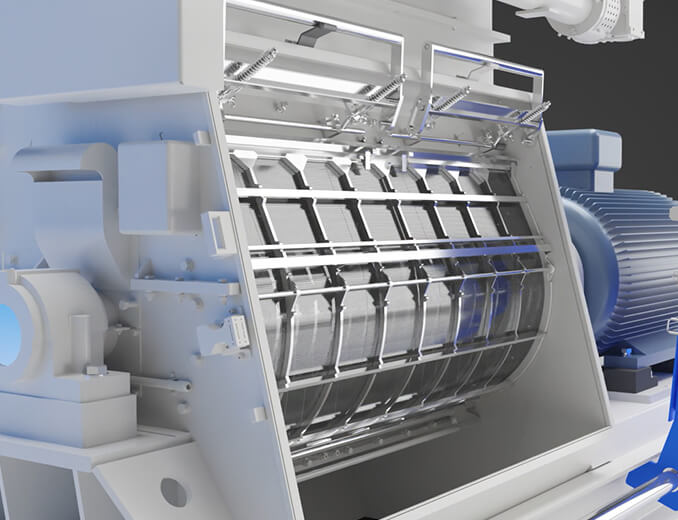
Engineers often analyze the physical interface between raw ingredients and processing equipment to optimize output. The configuration of screen perforations within a hammer mill serves as a critical bottleneck or accelerator for production efficiency. By adjusting these geometric patterns, facilities modify how material moves through the system, directly impacting the final throughput and the physical quality of the product during milling grinding tasks.
Round Versus Square Hole Dynamics
The choice between hole shapes alters how particles interact with the screen surface. Round holes provide structural rigidity, which extends the service life of the components in high-intensity milling grinding environments. Conversely, square holes offer a higher open area percentage, which facilitates faster material discharge. This increased flow can significantly boost hourly capacity, although it may lead to a different particle distribution compared to circular designs.
Balancing Open Area Percentage
The percentage of open area on a screen determines the total volume of material that can pass through the unit during a set timeframe. Screens with higher open areas reduce internal friction, effectively lowering the energy load on the motor during grinding operations. Operators must balance this capacity gain against the potential for increased fines, as a larger open area might allow smaller particles to pass before they are fully processed by the hammers.
Layout Influences on Capacity
The arrangement of these holes—whether staggered or straight—changes the mechanical behavior of the material flow. A staggered layout often creates a more uniform path for ingredients, preventing dead zones where material might accumulate. This optimization is essential for a roller grinder machine setup, where precision dictates the consistency of the finished batch. FAMSUN focuses on these specific engineering details to ensure that their equipment handles diverse feed requirements.
Operational Outcomes
Managing the interaction between perforation geometry and particle output ensures that the facility reaches its desired production targets. FAMSUN provides technical support to help operations assess their screen configurations. By aligning screen layout with specific feed needs, the assembly operates at expected potential. Strategic adjustments in the grinding chamber protect the longevity of the screens while optimizing throughput. Careful evaluation of these geometries allows a roller grinder machine to deliver consistent texture and volume, supporting the efficiency of the entire feed line.