Battery chemistry is becoming an increasingly important consideration when planning large-scale energy storage. Lithium iron phosphate (LFP) remains the dominant chemistry for stationary battery storage, while sodium-ion technology is emerging as an alternative for applications where temperature performance, material availability, and chemistry diversification are important. Choosing between them requires a comparison based on the project’s actual operating conditions.
Why Compare Sodium-Ion and LFP Batteries?
LFP is a lithium-ion chemistry that has become widely established in energy storage because it offers a combination of cost, safety, cycle performance, and manufacturing maturity. The International Energy Agency reports that LFP batteries accounted for around 90% of battery storage deployments in 2025, reflecting their strong position in the stationary market.
Sodium-ion batteries use sodium ions instead of lithium ions to store and release electrical energy. Their basic operating principles are similar to lithium-ion batteries, but the different chemistry can provide distinct performance characteristics. The U.S. Department of Energy identifies sodium-ion technology as one pathway for developing next-generation battery systems.
For an energy container, the choice is therefore less about identifying one universally superior chemistry and more about matching battery characteristics with project requirements.
Energy Density: LFP Maintains an Advantage
Energy density affects how much energy can be stored within a given weight or volume. Higher energy density can reduce the physical footprint required for a specified capacity, which matters when land or transportation constraints are significant.
Current LFP technology generally maintains an energy-density advantage over sodium-ion batteries. The IEA reports that the latest sodium-ion cells reach up to approximately 175 Wh/kg, compared with up to about 205 Wh/kg for the latest LFP cells.
This difference does not automatically make sodium-ion unsuitable for stationary applications. Stationary systems can often accommodate larger physical footprints than electric vehicles, making energy density less restrictive. Nevertheless, developers should evaluate container dimensions, usable capacity, and site constraints together.
Low-Temperature Performance Favors Sodium-Ion
One of the strongest arguments for sodium-ion technology is its performance in cold environments. LFP systems can experience greater performance limitations at low temperatures, making thermal management and operating strategy particularly important for installations in cold climates.
According to the IEA, the latest sodium-ion batteries can retain around 90% of nominal capacity at temperatures as low as -40°C and can operate at temperatures up to 70°C. The same source identifies low-temperature performance as a key potential advantage over LFP.
For an industrial battery storage installation exposed to severe winter conditions, this characteristic may influence the balance between battery performance and the requirements placed on thermal management equipment.
Supply Chain Considerations
Sodium-ion batteries do not require lithium, offering potential supply-chain diversification, while sodium is widely available. However, they still rely on other materials with supply considerations.
LFP benefits from a more mature manufacturing ecosystem and extensive deployment experience. Sodium-ion production is growing, but the IEA reports it remained below 1% of lithium-ion production in 2025. Buyers should therefore assess supplier scale, product maturity, bankability, and service capabilities.
Safety Requires a System-Level Evaluation
Battery chemistry is only one part of storage safety. Cell design, electrolyte formulation, battery management, thermal control, enclosure design, protection devices, fire detection, and system-level testing all contribute to the final safety profile.
Sodium-ion technology is often associated with safety advantages, but it should not be treated as inherently risk-free. The U.S. Department of Energy notes that sodium-ion safety is still an area of ongoing study as commercial products become more widely available.
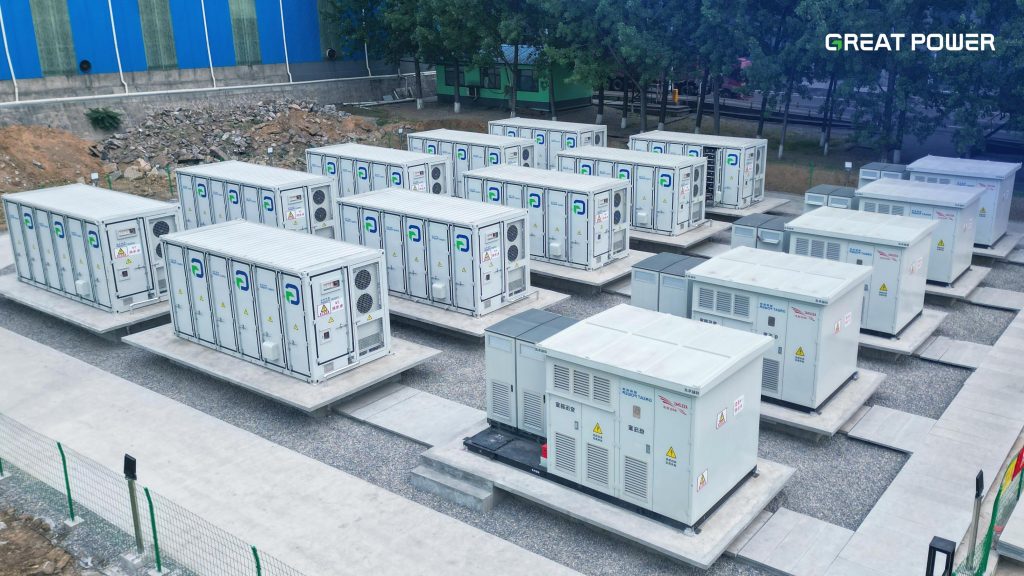
LFP systems likewise require appropriate safety engineering. For example, the Max 5000 large-scale storage system is listed with UL9540A and NFPA855 compliance and uses multiple enclosure protection levels, including IP67 protection for the Battery Pack.
Cycle Life and Operating Economics
Cycle life is important for frequently used energy storage systems because it affects long-term value. Sodium-ion technology has advanced significantly, with published results showing over 150 Wh/kg and more than 3,000 cycles for layered oxide systems, while polyanion systems exceed 6,000 cycles.
LFP has a longer commercial track record. Buyers should compare technologies under equivalent conditions, including depth of discharge, temperature, C-rate, usable capacity, and end-of-life criteria.
How Great Power Approaches Both Technologies
Great Power has developed sodium-ion technology alongside its established LFP battery portfolio. Its sodium-ion research began in 2019, followed by advances in layered oxide and polyanion systems and serial trial production of small cylindrical batteries in 2022. The company subsequently moved its sodium-ion technology toward commercialization and has reported sodium-ion energy storage projects.
For large-scale storage, its current product portfolio includes the Max 6250, Max 5000, and Max 3440. The Max 6250 uses self-developed Ultra 588Ah battery cells and a liquid-cooled PACK, while the Max 5000 provides an integrated 20-foot container configuration with published DC-side round-trip efficiency of 96% at 0.25P and 95% at 0.5P.
This technology breadth allows project developers to evaluate different battery approaches according to application requirements rather than being limited to a single chemistry.
Conclusion
Sodium-ion and LFP batteries each offer meaningful advantages for energy storage. LFP currently leads the stationary market because of its maturity, established supply chain, competitive economics, and strong deployment record. Sodium-ion brings potential benefits in low-temperature performance and supply-chain diversification while continuing to improve in energy density and cycle life.
When selecting an energy container, developers should compare chemistry, usable energy, thermal requirements, safety architecture, cycle profile, operating climate, supplier maturity, and total cost of ownership. For industrial battery storage, the strongest solution is ultimately the chemistry and system configuration that best matches the project’s technical and commercial objectives.