Threadlocker adhesives are widely used to secure threaded fasteners in mechanical assemblies, but their curing behavior is not identical across all metal surfaces. A threadlocker applied to one type of fastener may reach handling strength quickly, while the same adhesive may require significantly more time to cure on another metal.
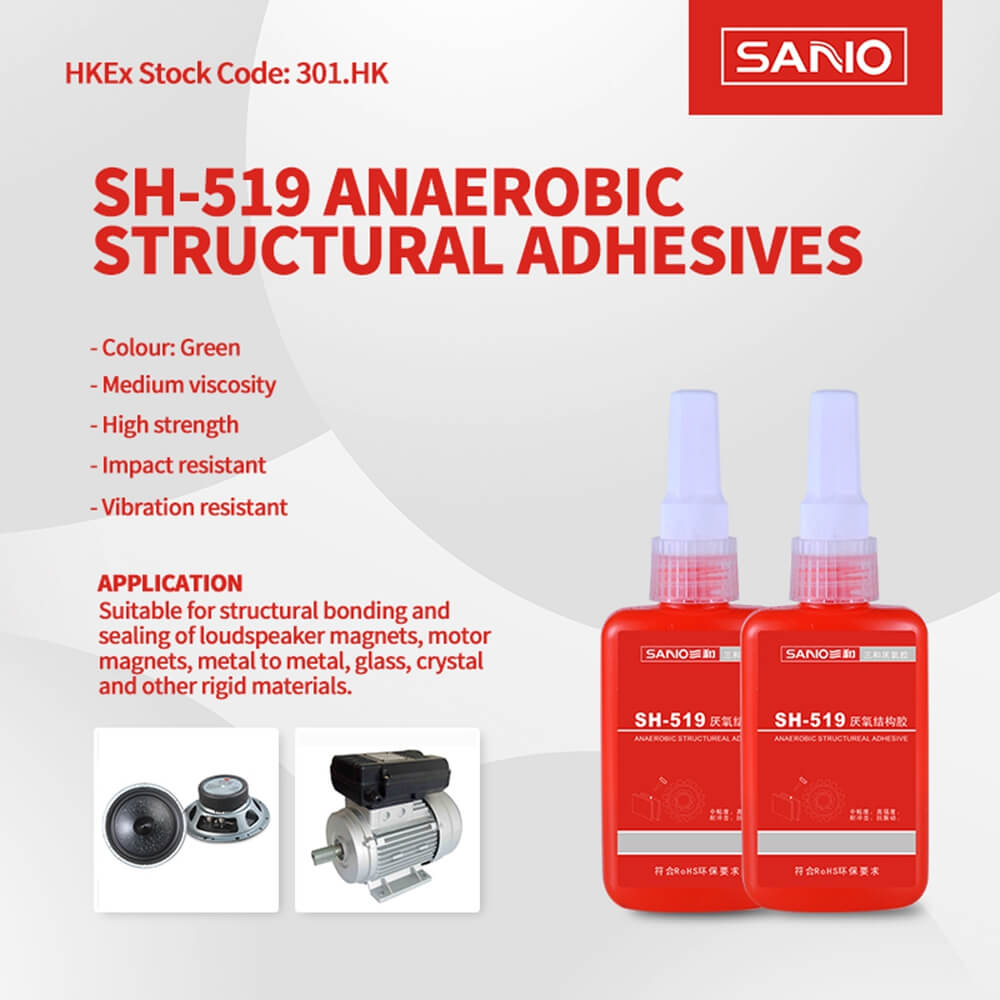
The difference is closely related to surface activity. Certain metals can accelerate the chemical reactions responsible for anaerobic adhesive curing, while less active surfaces may slow the process. SANVO develops threadlocking solutions by considering how adhesive chemistry interacts with different metal substrates and application conditions.
Understanding the relationship between metal surface activity and cure rate helps engineers select suitable threadlocker adhesives and achieve more predictable assembly performance.
Why Metal Surface Activity Influences Threadlocker Cure Behavior
Anaerobic threadlocker adhesives cure through a chemical reaction that occurs when oxygen is removed and the adhesive is confined between metal surfaces. However, the absence of oxygen alone does not affect curing speed. The metal surface also plays an important role in activating the polymerization process.
Active metal surfaces can participate in the curing reaction by supporting the formation of reactive species that accelerate polymer chain development. When the adhesive contacts these surfaces inside a threaded connection, the curing process can begin more efficiently.
Metal activity levels vary according to chemical properties and interaction capability with adhesive formulations, which explains why cure times differ across fastener materials. Manufacturers must account for this variability to ensure reliable threadlocking performance.
Cure speed directly affects assembly schedules, equipment handling, and final connection reliability, making metal-adhesive interaction understanding essential for industrial applications. As a dedicated threadlocker adhesive manufacturer, SANVO develops threadlocking formulations that address this interaction, delivering consistent curing performance across diverse metal substrates.
How Active Metals Accelerate Anaerobic Adhesive Polymerization
Certain metals are naturally more effective at promoting anaerobic adhesive curing. Materials such as steel, iron, and some copper-containing alloys can provide surfaces that support faster polymerization reactions.
When a threadlocker is applied to an active metal fastener, the surface helps initiate the chemical process that transforms the liquid adhesive into a solid polymer structure. This reaction allows the adhesive to develop strength and resist loosening caused by vibration, shock, and temperature changes.
The effect is especially noticeable in applications where fast assembly turnaround is required. A more active surface can reduce the time needed before the assembled component reaches sufficient strength for further handling.
However, the exact curing behavior depends on the complete combination of adhesive chemistry and metal characteristics. Surface activity supports the reaction, but the formulation must also be designed to respond effectively to the substrate.
Why Passive Metal Surfaces Slow Down Threadlocker Curing
Not all metals provide the same level of activation. Some surfaces have lower chemical activity and may not promote anaerobic curing as efficiently.
Stainless steel is a common example because its protective oxide layer can reduce surface interaction with the adhesive. Aluminum and certain treated metal surfaces may also show slower curing behavior depending on their surface characteristics.
When a less active metal is used, the threadlocker may require additional time to achieve full strength. In some cases, manufacturers use specially designed formulations or surface preparation methods to improve curing performance.
This difference is important in industries that use mixed metal assemblies. A production line containing various fastener materials may experience inconsistent curing results if the adhesive system is not matched to the substrate conditions.
How Metal Composition Changes Threadlocker Activation Speed
The chemical composition of a metal affects how it interacts with threadlocker adhesives. Two fasteners may look similar but provide different curing behavior because their elemental structures are different.
Iron-based metals often provide favorable conditions for anaerobic curing because of their surface reactivity. Copper and brass materials may also influence cure speed due to their chemical characteristics.
In contrast, metals containing protective layers or elements that reduce surface interaction may require more specialized adhesive systems.
For adhesive manufacturers, evaluating metal composition is an important part of formulation development. A threadlocker designed for general steel applications may need modification when used on specialty alloys or treated surfaces.
This is why industrial customers often require adhesive solutions that match their specific fastener materials rather than selecting products based only on strength grades.
How Manufacturers Adjust Formulations for Different Metal Substrates
A threadlocker adhesive manufacturer must consider substrate compatibility when developing products for different industries. Adjusting formulation chemistry allows adhesives to perform more consistently across various metal surfaces.
Manufacturers may modify activator systems, reactive components, and curing characteristics to improve performance on less active substrates. These adjustments help compensate for differences in metal surface behavior.
The goal is not simply to create the fastest curing adhesive. Excessively rapid curing may affect application flexibility, storage stability, or assembly requirements.
A balanced formulation provides suitable working time while ensuring reliable strength development after installation. This requires careful control of adhesive chemistry and knowledge of how different metals influence polymerization.
Evaluating Cure Speed for Industrial Threadlocking Applications
Cure speed evaluation is essential when threadlocker adhesives are used in demanding manufacturing environments. Engineers need to understand how quickly the adhesive develops strength under actual assembly conditions.
Testing may involve different fastener materials, gap conditions, temperatures, and application methods. These evaluations help determine whether the adhesive can meet production requirements.
For example, an automotive assembly line may prioritize rapid strength development, while maintenance applications may require longer positioning time before full curing.
Evaluating performance on the intended substrate provides more accurate results than relying only on standard laboratory conditions. It helps manufacturers and users understand how metal activity affects real-world adhesive behavior.
Improving Threadlocker Selection Through Metal Compatibility Analysis
Choosing a threadlocker requires more than considering final strength values. The interaction between adhesive chemistry and metal surface activity can significantly influence installation success.
When engineers understand the relationship between substrate activity and curing behavior, they can avoid unexpected delays or inconsistent performance. Selecting the right adhesive for the specific metal type improves assembly reliability and reduces the risk of fastener failure.
Metal compatibility analysis is especially valuable in industries where different materials are combined within the same system. It allows manufacturers to develop more predictable fastening solutions.
Conclusion
Surface active metals play a significant role in determining how quickly threadlocker adhesives cure. Active metals can accelerate anaerobic polymerization, while passive surfaces may require additional formulation adjustments to achieve reliable performance.
From metal substrate evaluation to curing behavior analysis, SANVO‘s threadlocking adhesive development considers compatibility and performance together. This systematic approach enables manufacturers to support more predictable fastening performance by understanding the connection between surface activity and adhesive chemistry.